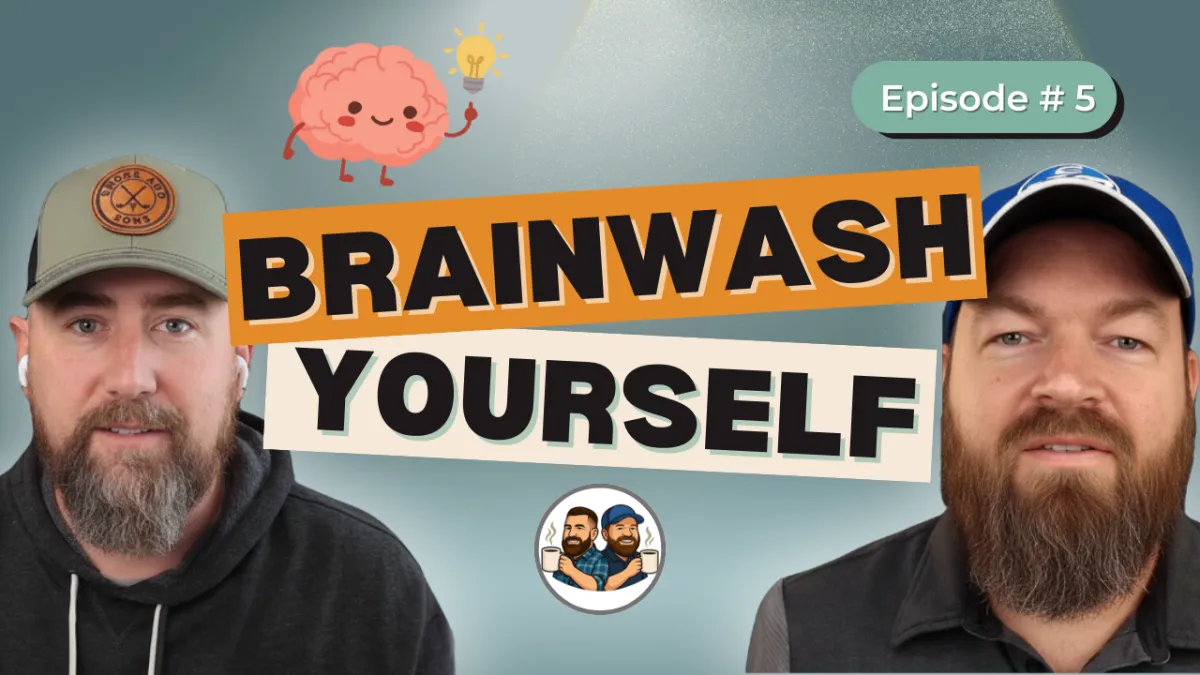
Rethinking Willpower: How to Transform Your Dreams into Reality
☝️ Watch the full conversation here! ☝️
"Grow up Peter Pan. Grow up, put your big boy pants on."
-- Fitz
In a world where motivation often fizzles out, the quest for lasting change can feel daunting. In a recent episode of the Fits and Francian Show, hosts Fitz and Franson delve into a powerful approach to achieving your goals that goes beyond traditional willpower and motivation. They explore the insights of behavioral expert Chase Hughes, revealing how understanding our emotional drivers can lead to real, sustainable change.
1. The Myth of Willpower
Fitz and Franson kick off the episode by challenging the conventional wisdom around willpower. While many believe that sheer determination is the key to success, the hosts argue that this mindset can often set us up for failure. Fitz shares a compelling analogy: relying on willpower is like trying to hold a beach ball underwater. Initially, it may seem manageable, but eventually, fatigue sets in, and the ball pops back up, leading to feelings of guilt and frustration. This metaphor resonates with anyone who has experienced the cycle of setting ambitious goals but failing to follow through.
2. Introducing Chase Hughes
The conversation shifts to Chase Hughes, a behavioral science expert with a unique background in the Navy. Fitz and Franson highlight that Hughes’s insights stem from high-stakes situations, making his advice particularly impactful. Unlike typical self-help gurus, his focus is on understanding human behavior at its core, addressing the emotional and instinctual aspects of decision-making rather than just logical goal setting.
3. Understanding the Brain's Mechanics
Hughes's core premise is that traditional goal setting often overlooks the limbic system, the brain's emotional center. Fitz compares this to trying to convince a lion not to eat by presenting a PowerPoint. The lion, driven by instinct, does not respond to logic. Similarly, our brains need to feel a compelling reason to change. This is where the concept of defining both your dream and your nightmare comes into play.
4. Defining Your Dream and Nightmare
Franson introduces a practical exercise inspired by Hughes’s teachings. List your ideal outcome in vivid detail—what does achieving that goal look and feel like? But equally important is to outline your nightmare: what occurs if you do nothing? Fitz emphasizes the need for brutal honesty in this process, as the pain of remaining stagnant must outweigh the discomfort of change. This emotional leverage ignites a sense of urgency, motivating individuals to take action.
5. Personal Transformation through Visualization
Fitz shares a personal story about his own transformation, having lost nearly 90 pounds after being confronted with a photo that starkly illustrated his struggles. This moment became a catalyst for change, where the nightmare he envisioned propelled him towards a healthier lifestyle. The hosts agree that many people resist change because the familiar feels safer than the unknown, yet embracing the discomfort of change can be incredibly liberating.
6. The Science Behind Mental Contrasting
The episode also references the research of Gabrielle Oettingen, who studied the benefits of mental contrasting. Her findings suggest that simply visualizing positive outcomes can lead to complacency, while contrasting dreams with real obstacles energizes the brain to act. By acknowledging potential challenges, individuals can cultivate a sense of urgency that fuels their motivation.
Conclusion: The conversation between Fitz and Franson highlights a transformative approach to goal setting that transcends traditional notions of willpower. By defining both your dreams and nightmares, you create a powerful emotional framework that drives genuine change. Embracing the discomfort of change and understanding the mechanics of your brain can lead to lasting success. Remember, it’s not just about motivation; it’s about making your future a necessity rather than an option.
Ready to stop guessing and start growing?
👉 Apply for coaching or book a strategy call
https://link.apisystem.tech/widget/form/w4mlaKkybLz5p60qyoYt
Learn more at 👉 https://powrful.com
Your Key Takeaways:
- Willpower alone is often insufficient for lasting change.
- Understanding the emotional drivers behind behavior is crucial.
- Defining both your dream and nightmare can create powerful motivation.
- Embracing discomfort and facing potential obstacles can lead to real transformation.
